Friday, 6 November 2026Five minutes, sourced

The Friday Intelligence Briefing

The Build BriefIssue 016

The Reserve Bank raised the cash rate to 4.85% on a six to three vote.

Three of the nine board members voted to keep the rate at 4.60%. The four major banks will raise variable home loan rates by 0.25 percentage points from Friday 13 November.

By BuilderHQ, Melbourne

The Note

The cash rate rose to 4.85%, and three board members voted to hold.

On Tuesday the Reserve Bank raised the cash rate by 0.25 points to 4.85%. The board voted six to three.

The Bank's new forecasts, released the same day, have dwelling investment growing more slowly through 2027 and then falling. Dwelling investment includes renovations, so it is not a count of new homes.

ASIC's annual insolvency figures show construction was again the largest industry. Market Watch sets out checks for each party to a project.

In the Feature, how architects and building designers use BuilderHQ from the first client meeting to tender. In Partner Corner, Base Building Design and its Rooney House in Richmond.

The BuilderHQ Team

Market Watch

Three developments this week.

  1. 01Rate
  2. 02Forecast
  3. 03Safeguards
Market Watch · 01 · The Rate, story 1 of 3

The Reserve Bank raised the cash rate to 4.85%, with three of nine board members voting to hold.

4.85%

the cash rate target from 4 November, after the Reserve Bank's decision on Tuesday 3 November

Six to three vote

The Reserve Bank raised the cash rate target by 0.25 points to 4.85% on Tuesday. It is the fifth rise of 2026.

The board voted six to three. At her media conference, Governor Michele Bullock said the three members who preferred to hold gave more weight to the risk of the economy slowing. The Bank's statement said: "The economy is slowing, housing prices have fallen significantly and the unemployment rate has risen."

The statement no longer says the cash rate may need to rise further. Governor Bullock said: "Some pain now will prevent even worse pain down the track."

CBA, Westpac, NAB and ANZ will each raise variable home loan rates by 0.25 percentage points from Friday 13 November. ANZ says this adds about $79 a month to repayments on a $500,000 owner-occupier principal and interest loan.

The next decision is on Tuesday 8 December. Issue 012 covered the rise to 4.60%, and Issue 015 the forecasts before this decision.


What this means for you

Homeowners & developers
Variable rates with the four major banks rise from 13 November. Recheck the total project budget, including loan repayments, before signing a building contract.
Architects & designers
Some clients may ask for a staged or simpler design. Consider preparing those options early, while the design can still change.
Builders
Where a client's finance is still pending, confirm their position before the contract is signed, and check the contract's finance clauses.
Finance brokers
Before 13 November, contact clients with construction loans in progress and clients whose fixed rates end in the next six months.
Contractors
Rates on business loans and equipment finance may also rise. Check the terms of your own facilities.
The vote, and the cash rate in 2026
The board's vote, 3 November

The three members' reasons are from the Governor's media conference.

The board's vote, 3 November. Six members voted to raise the cash rate target to 4.85%. Three voted to leave it at 4.60%.
SeriesMembers
voted to raise6
voted to hold3
The cash rate target in 2026

Dates are when each change took effect. The cash rate was held in June and August.

The cash rate target in 2026. 3.60% on 1 January 2026, then five rises of 0.25 points to 4.85% from 4 November.
SeriesCash rate
At 2026-01-013.60%
from 4 Feb3.85%
from 18 Mar4.10%
from 6 May4.35%
from 30 Sep4.60%
from 4 Nov4.85%

$79about $79 more a month on a $500,000 owner-occupier principal and interest loan with ANZ, from 13 November

Source: Reserve Bank of Australia, Statement by the Monetary Policy Board and media conference, 3 November 2026 · Reserve Bank of Australia, cash rate target · CommBank, Westpac, NAB and ANZ rate announcements, 4 November 2026.

Market Watch · 02 · The Forecast, story 2 of 3

The Reserve Bank forecasts a fall in dwelling investment in 2027 and 2028.

−3.5%

the Reserve Bank's forecast change in dwelling investment over the year to June 2028, the lowest point in its forecasts

Forecast, not data

Alongside the decision, the Reserve Bank published new forecasts in its Statement on Monetary Policy. Dwelling investment is spending on building new homes and on renovating and altering existing ones. It is measured in dollars, not as a count of housing starts.

Growth is forecast to slow through 2027. Dwelling investment is then forecast to fall over the years to December 2027 and December 2028, with the largest fall in the year to June 2028.

The Bank expects headline inflation to peak at 4.5% in the December quarter and to stay above 3% until late 2027. The forecasts assume the cash rate follows market pricing: about 4.9% in mid-2027, and 4.8% from the end of 2027.

The Bank also says established housing prices "have continued to fall more quickly than expected". Issue 006 covered an earlier forecast.

What this means for you

Homeowners & developers
If the forecasts prove accurate, builder availability may improve in 2027 and 2028. Consider this when deciding when to start a project.
Architects & designers
Projects in design now may go to tender in 2027, when the Reserve Bank expects less building activity. Consider this when advising clients on timing.
Builders
Review workload and cash flow forecasts for 2027 and 2028 against the forecast fall in dwelling investment.
Finance brokers
The forecasts assume the cash rate stays close to its current level through 2028. Base repayment scenarios on current rates rather than an expected cut.
Contractors
Review whether work is spread across enough builders, including builders undertaking renovation and infill projects.
Dwelling investment, change over the year

Forecast, not data, from December 2026 onward. Each column is the change over the year to that month. Reserve Bank of Australia, November 2026.

Dwelling investment, change over the year. Year to June 2026, data: 5.8%. Forecasts: year to December 2026, 5.1%; June 2027, 1.3%; December 2027, −2.8%; June 2028, −3.5%; December 2028, −1.8%.
SeriesChange over the year
Jun 2026 (data)5.8%
Dec 20265.1%
Jun 20271.3%
Dec 2027−2.8%
Jun 2028−3.5%
Dec 2028−1.8%

Source: Reserve Bank of Australia, Statement on Monetary Policy, November 2026, Table 3.1 (published 3 November 2026).

Market Watch · 03 · The Safeguards, story 3 of 3

Construction accounted for 24.5% of company insolvency appointments in 2025-26.

24.5%

of external administration appointments in 2025-26 were in construction, the most of any industry

ASIC, Corporate Insolvency Update

ASIC's annual figures show 14,153 companies entered external administration for the first time in 2025-26. That was 4% fewer than the year before.

Construction was the most common industry for appointments. The industry has a very large number of small businesses, so its share of appointments does not mean a similar share of builders is affected. Most construction businesses continue to trade.

Simple checks before and during a project reduce the risk for each party to the contract. Issue 008 explained what administration means for owners, including home warranty cover.

Insolvency appointments by industry, and the checks for each party
Share of external administration appointments, 2025-26

The five industries ASIC publishes. Shares are of appointments, not of all companies in each industry.

Share of external administration appointments, 2025-26. Construction 24.5%, accommodation and food services 14.7%, other services 9.8%, retail trade 7.1%, professional, scientific and technical services 7.0%.
SeriesShare of appointments
Construction24.5%
Accommodation and food services14.7%
Other services9.8%
Retail trade7.1%
Professional, scientific and technical services7.0%
Checks for each party to a project
Homeowners
Confirm home warranty cover before paying a deposit, and pay only for work that is complete.
Architects and designers
Check a builder's registration and insurance before recommending them.
Builders
Keep cash flow visible, and speak with your accountant early if margins tighten.
Finance brokers
Confirm the builder's registration and insurance before the first drawdown.
Contractors
Invoice promptly, keep records, and know your rights under security of payment laws.

Source: ASIC, Corporate Insolvency Update, Issue 41, October 2026.

The Feature

How architects and building designers use BuilderHQ, from the first client meeting to tender.

Practices use BuilderHQ at the stages where cost, budget and the choice of builder are decided. This Feature sets out where each module is used and how client referrals work.

More than 20 design practices now appear on BuilderHQ's Preferred Partner register, and practices use the platform on projects from renovations to multi-dwelling work. The modules support the practice's own work. The design, the documentation and the advice to the client remain the practice's.

Where each module fits

Most residential projects follow similar stages. The chart shows the stages at which a practice uses each module.

Where each module fits in a project

  1. Client referral

    BuilderHQ introduces · Introduction

    A homeowner who asked for a design practice, with the brief, budget and timing.

  2. Cost estimate

    Prepared by BuilderHQ · Brief and concept to documentation

    Low, Most Likely and High totals for the design, with each trade priced.

  3. Cost optimisation

    Prepared by BuilderHQ · Developed design

    Options to bring the design back to budget, each with its saving.

  4. Tender

    Run by the practice · Tender

    Builders price one structured scope, and the tenders are compared.

  5. Construction programme

    For the builder · Construction

    Each stage of the build with its dates.

Stages vary between practices and projects. A practice can request a cost estimate at more than one stage.

While the design can still change

A cost estimate gives the practice and the client Low, Most Likely and High totals for the design, with each trade priced and the allowances listed. Practices request one at concept or developed design, so the budget can be discussed against the current drawings.

Where the estimate is above the budget, a cost optimisation sets out options that could bring the project back to it, each with its estimated saving and trade-off. The practice decides which options suit the design, and discusses them with the client.

At tender

The practice uploads the documents, and BuilderHQ organises them into a structured scope that the client approves. Every builder prices the same scope, in a private round with builders the practice invites or an open round with BuilderHQ's network. The tenders are compared on six published measures. The practice advises the client, and the client chooses the builder. Issue 012 sets out each step.

Once a builder is engaged, the builder can request a construction programme for the same project.

Client referrals

Homeowners who ask BuilderHQ for a design practice are introduced to a practice in the Preferred Partner network whose work suits the project. As the network has grown, BuilderHQ has begun sharing client briefs with partner practices.

How a client referral works

What the practice does

  • Sets the area it works in, the project types it takes on and its smallest budget.
  • Reviews each brief and accepts or declines within three business days.
  • Contacts the client once it accepts.

What the client receives

  • An introduction to a practice whose work suits the project.
  • A practice that has read the brief, budget and timing before the first call.
  • The choice of whether to engage the practice.

What the practice receives

  • The client's brief, budget and timing before it decides.
  • The client's contact details once it accepts.
  • A profile on the Preferred Partner register.

Client referrals are part of the Essentials and Pro practice plans. A practice receives no payment from BuilderHQ or from any builder for a referral, a tender or the builder its client chooses. The building contract is between the client and the builder.

What it means for the client

A practice that works this way can give the client a cost estimate before the design is settled, set out options if the budget is tight, and ask builders to price one defined scope. The client sees the figures behind each decision and makes those decisions.

Source: BuilderHQ platform and Preferred Partner register, November 2026.

For Practices

The modules available to architects and building designers.

Practices request each module from their dashboard, and each is included in one or more practice plans. Reports are prepared by BuilderHQ's team from the practice's drawings.

  • 01Cost Estimates

    Low, Most Likely and High totals, with each trade priced and the allowances listed.

    Plans: Lite, Essentials and Pro

    How it works, Issue 013
  • 02Cost Optimisation

    Options that could bring a project back to its budget, each with its estimated saving and trade-off.

    Plans: Essentials and Pro

    How it works, Issue 014
  • 03Tenders

    Open rounds with BuilderHQ's builder network, and private rounds with builders the practice invites. Every builder prices the same scope.

    Plans: Open rounds on every plan, private rounds on Essentials and Pro

    How it works, Issue 012
  • 04Client Referrals

    Introductions to homeowners who asked BuilderHQ for a design practice, with the brief, budget and timing.

    Plans: Essentials and Pro

    The partner register

A Compliance Check for practices is in preparation. Builders can request a construction programme, covered in Issue 015.

Partner Corner

Meet Base Building Design, and the Rooney House in Richmond.

A Carnegie studio for heritage renovations and new homes, with the interiors designed alongside the building.

Heritage renovations & New homes and townhouses · Carnegie, VIC · In the network since 2026

Base Building Design & Interiors logo

Building design studio · Carnegie, VIC

5.0

Google rating, 3 reviews

2010

Established

2012

Registered building designer

Why we introduce them

Base Building Design & Interiors is led by Lenny Sacco, a registered building designer and a member of Design Matters National. Lenny founded the practice in 2010 as Raw Drafting, and renamed it in 2019.

The practice

The studio works across Melbourne and the Mornington Peninsula on heritage renovations, new homes, townhouses and multi-residential projects, from feasibility and town planning through design and documentation to interior design.

Base Building Design carries each project from the building design through to the interiors.

The project

Rooney House, Richmond

A mid-1800s Victorian terrace, restored at the front and extended at the rear for a growing family.

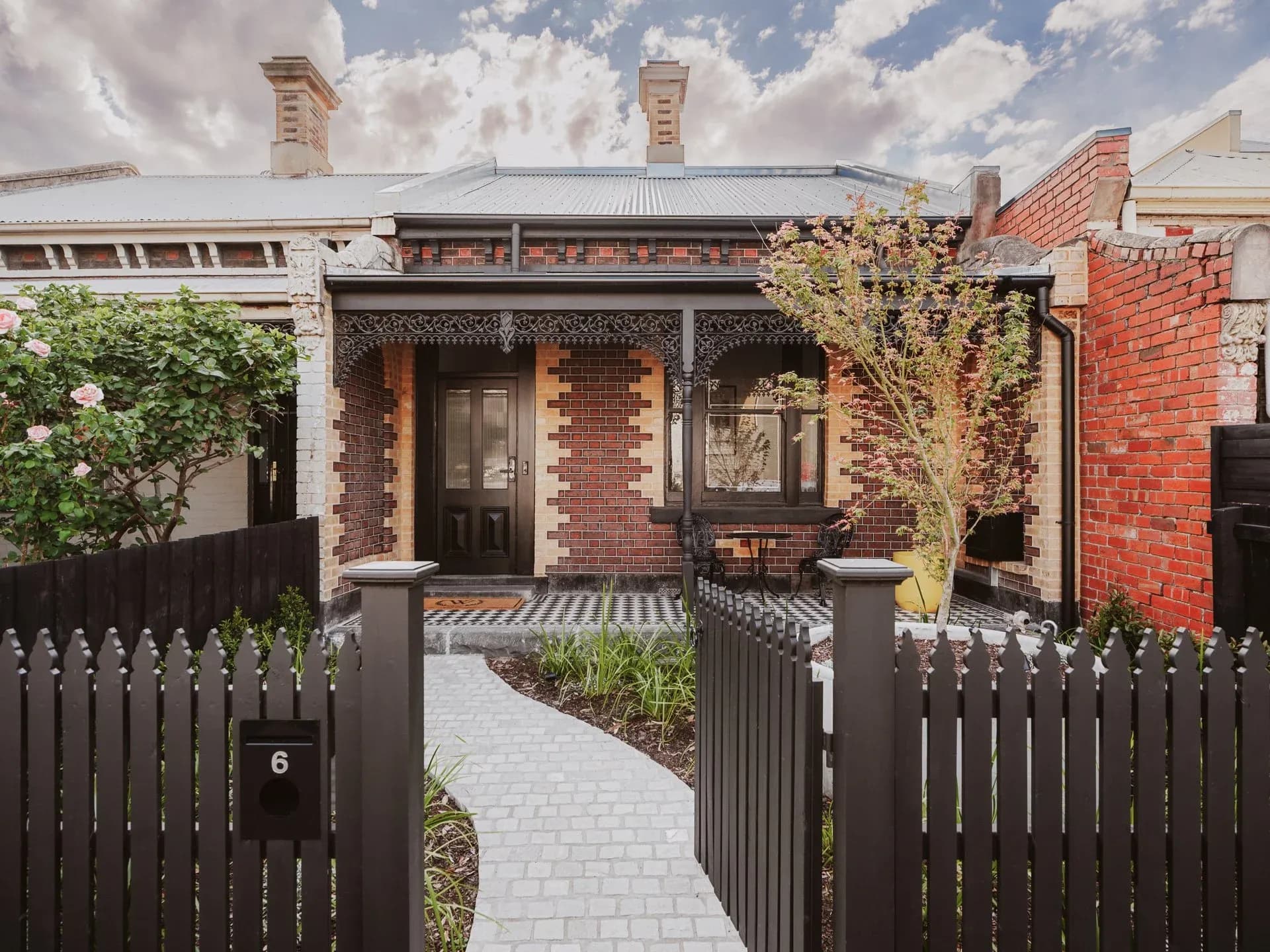
The restored front of the Rooney House in Richmond: a single-fronted Victorian terrace in red and cream brick with an iron-lace verandah, behind a dark picket fence and a paved path.
Photography by Courtney King, from Base Building Design & Interiors.

The brief was to retain a mid-1800s terrace and adapt it for a growing family. Base restored the heritage facade and the formal front rooms, and converted them into the main bedroom suite, keeping the original detailing.

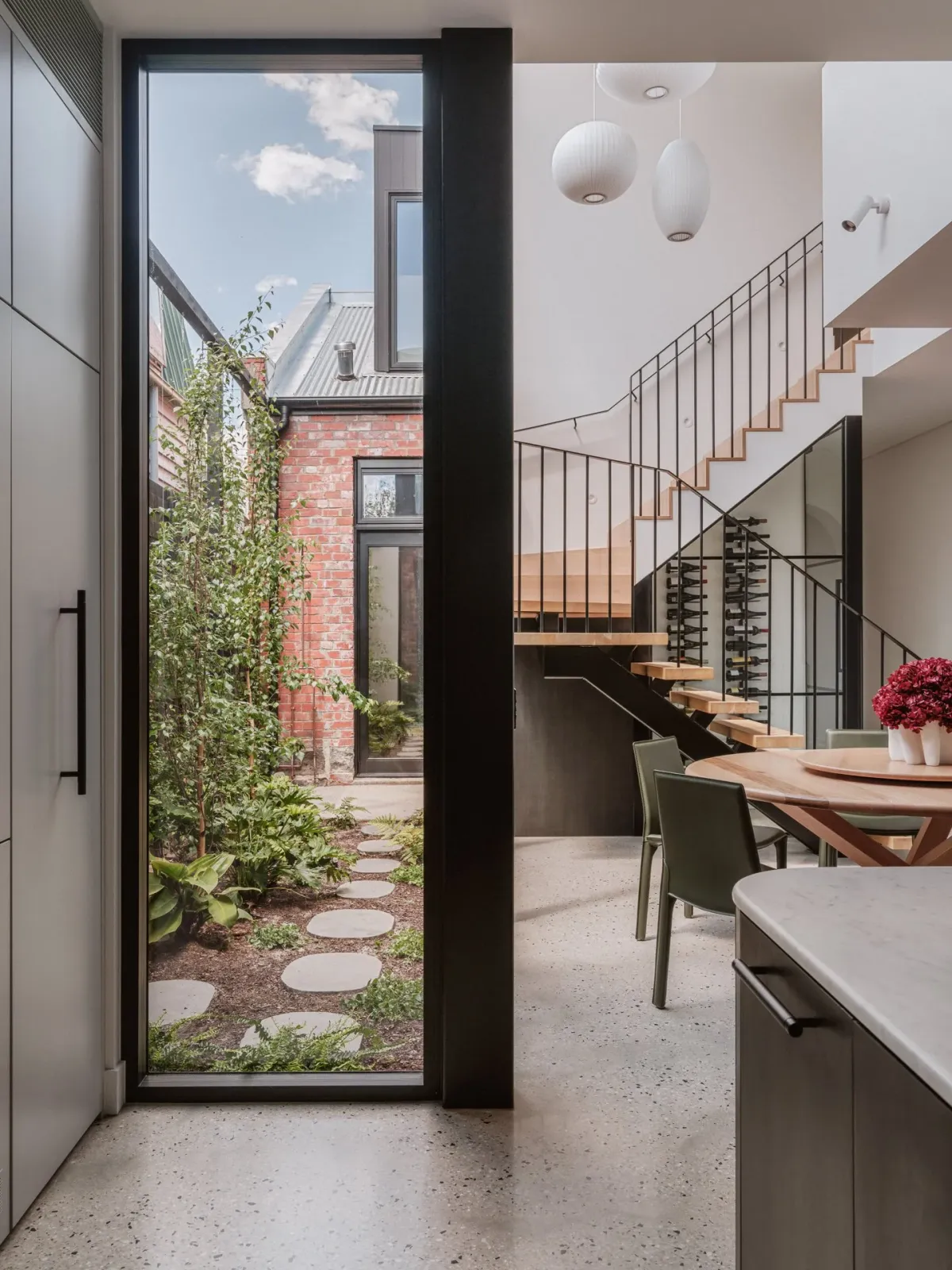
Behind them, a new addition holds an open-plan kitchen, dining and living area. The site is narrow, so the design adds a central courtyard that brings light and air into the middle of the house, with the living spaces opening onto it.

The house was completed in 2025 and built by Blueprint Constructions.

See the Rooney House on Base Building Design's website
Project
Rooney House
Location
Richmond, VIC
Type
Heritage terrace, additions and alterations
Practice
Base Building Design & Interiors
Builder
Blueprint Constructions
Completed
2025
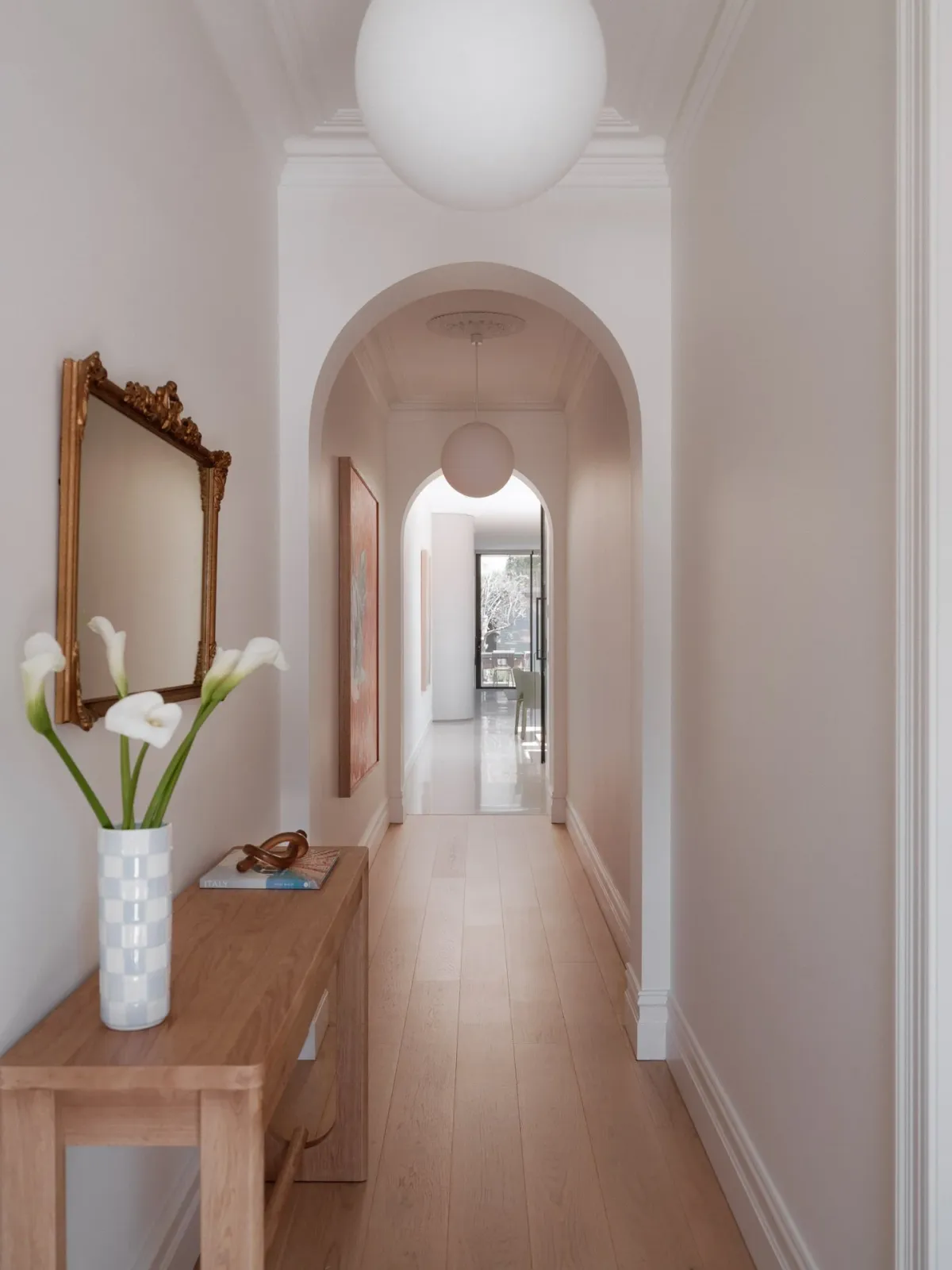
Inside the addition: the kitchen bench and dining table beside a full-height glass door to the central courtyard, with a steel and timber stair rising alongside.The original hallway, restored, with its arch leading through to the new living areas at the rear.
In Brief

Also this week

Victoria is in caretaker mode until the 28 November election.

The caretaker period began at 6pm on 3 November, and major new decisions now wait until after the election. The new deposit and progress payment regulations were made on 27 October, before it began, and start on 31 March 2027. Until then, the current 5% deposit cap continues to apply to contracts of $20,000 or more.

House approvals fell in all five states with published figures.

Total dwelling approvals rose 5.1% to 17,948 in September, seasonally adjusted. Approvals for apartments, townhouses and other attached homes rose 16.6%. Private house approvals fell 5.3% nationally, and 6.0% in Victoria to 2,895.

The ACT has no seasonally adjusted house series. In trend terms, ACT dwelling approvals rose 12.9% to 333.

Melbourne home values are 7.6% lower than a year ago.

Values fell 0.8% in October, according to Cotality, and are 7.3% lower than five years ago. Canberra values fell 0.7% in the month. Nationally, values fell 1.2% in October and are 6.7% below their March peak.

The Parliamentary Budget Office is tracking Victorian election commitments.

The Parliamentary Budget Office's 2026 Election Commitment Tracker lists the commitments of parties with two or more MPs, and is updated weekly. Issues 014 and 015 set out the main housing commitments.

These are election commitments, not current law.

Coming up

  • Fri 13 NovVariable rate rises at the four major banks take effect
  • Wed 18 NovABS Wage Price Index, September quarter
  • Thu 19 NovABS Labour Force, October
  • Wed 25 NovABS monthly CPI, October
  • Sat 28 NovVictorian state election
  • Tue 8 DecNext RBA decision
Questions

Questions this edition answers

What is dwelling investment?
Spending on building new homes and on renovating and altering existing ones. It is measured in dollars, not as a count of homes, so it is not the same as housing starts.
When do the major banks' variable rate rises start?
CBA, Westpac, NAB and ANZ raise variable home loan rates by 0.25 percentage points from Friday 13 November 2026.
Does the Reserve Bank forecast its own rate decisions?
No. Its forecasts assume the cash rate follows market pricing, about 4.9% in mid-2027 and 4.8% from the end of 2027. That is an assumption, not a decision.
Is construction's 24.5% a share of all construction companies?
No. It is construction's share of external administration appointments in 2025-26, according to ASIC. Construction was the most common industry.
Does a practice receive a payment for a BuilderHQ referral?
No. A practice receives no payment from BuilderHQ or from any builder for a referral, a tender or the builder its client chooses.
Are Victoria's new deposit rules in force?
Not yet. The regulations were made on 27 October 2026 and start on 31 March 2027. Until then, the 5% cap applies to contracts of $20,000 or more.
Sources

Where this edition's numbers come from

This edition used data and reporting from the Reserve Bank of Australia, ASIC, the Australian Bureau of Statistics, Cotality, CommBank, Westpac, NAB, ANZ, the Victorian Government, the Parliamentary Budget Office and the ABC. The Build Brief is compiled by BuilderHQ, Melbourne.

Over to you

Has the rate rise changed a project you are working on?

Reply with a line. Responses help shape future editions.

Reply to the team

Share

The RBA raised the cash rate to 4.85% on a six to three vote, its forecasts have dwelling investment falling in 2027 and 2028, and how architects use BuilderHQ. This week's Build Brief.

Subscribe

Five minutes, every Friday.

Subscribe by email →RSS

Contact

The Build Brief is compiled by BuilderHQ, Melbourne. Read past editions at builderhq.com.au/build-brief.